Your home’s comfort depends on so many things we often take for granted. A reliable water heater quietly handles one of your family’s most essential needs, delivering hot water for showers, dishes, laundry, and cleaning. Most homeowners think about their water heater installation only when something goes wrong. But here’s the thing: if you know what to look for, you can catch problems early and avoid the chaos of an unexpected breakdown.
The life expectancy of a hot water tank varies, but recognizing the signs you need a new water heater helps you stay ahead of failure. Instead of facing a freezing shower on the coldest morning of the year, you’ll have time to plan.
When Should You Replace Your Water Heater and What Are the Warning Signs?
Your water heater works hard every single day. When it starts struggling, the signs appear gradually at first, then become impossible to ignore. Knowing when to replace your water heater means understanding the meaning of each warning sign. Some issues can be fixed, while others indicate your unit is nearing the end of its life. The question of how often to change a water heater really depends on recognizing these signals.
Let’s walk through each one so you understand exactly what’s happening in your home.
1. The Tank Has Been Running for Over a Decade
Most water heaters last between 10 and 15 years under normal conditions. Once yours reaches 10 years, you’re working with a unit that’s already delivered solid service. The internal components that keep everything running, such as the protective anode rod, gradually wear down over time. After a decade passes, you’re statistically much closer to failure than to a fresh start. This is one of the best reasons to plan for a water heater installation before problems arrive. Understanding how long a hot water tank lasts helps you anticipate when to replace it.
In Riverview, FL, with a hot, humid climate, the hot water tank life expectancy is often shorter than the national average, typically between eight and twelve years, depending on maintenance.
What the age of your unit actually means for your family:
- Find out when your tank was installed by checking your receipt or looking at the serial number plate on your heater
- Mark your calendar for year nine or ten so you can start planning replacement costs and researching quality options
- Older units work harder to stay efficient, which shows up immediately in your monthly energy bills
2. Brown or Yellow Water Comes Out When You Turn on the Hot Tap
When hot water starts looking brownish or yellowish, something is corroding inside your tank. This rust-coloured water smells metallic and indicates that the interior protective coating has deteriorated. Once rust forms inside, replacement is inevitable and should occur sooner rather than later. Recognizing signs that you need a new water heater like this one can help prevent further water quality issues throughout your home.
What rusty water tells you about your situation:
- Rust appearing right away when you first turn on the hot water means the problem is serious and advancing quickly
- Water that eventually clears suggests sediment rather than corrosion, though both point to aging tanks needing attention
- The reddish or brownish tint in the collected hot water confirms you’re dealing with interior deterioration happening now
- Rusty water from hot taps only indicates the tank itself, not your home’s supply lines or treatment system
3. Your Water Heater Makes Loud Popping or Rumbling Sounds
Weird noises coming from your water heater are worth paying attention to because they’re signs of a hot-water issue. Popping, rumbling, banging, or gurgling sounds indicate that mineral sediment is settling to the bottom of your tank. When the heating element warms up, it burns through that sediment layer, creating the sounds you hear throughout your home.
If you hear these sounds regularly, it’s a clear signal that you might need instant water heater repair or a new water heater installation fairly soon. Sometimes flushing helps, but persistent noise usually means the damage is already done.
What different sounds actually reveal:
- Loud popping sounds when the burner first fires up indicate severe sediment buildup at the bottom and require attention.
- High-pitched whistling or squealing indicates that minerals are gradually blocking water flow through the system.
- Deep rumbling or grinding indicates that internal corrosion has started progressively eating away at the tank walls.
- Using a professional sewer inspection camera helps determine whether flushing the water heater is effective or whether replacement is genuinely needed.
4. Your Showers Run Cold Halfway Through or Stop Feeling Hot
Running out of hot water can be very frustrating. When your hot water never reaches the temperature you remember, something inside is failing. The heating element may not be working correctly, or the thermostat may be drifting. Your tank may still hold water, but it can no longer be heated. This lack of hot water indicates you need a new water heater.
Lukewarm water or inconsistent water temperature throughout your home indicates that your tank needs professional attention. Many homeowners ask, “How often should you replace a water heater?” when faced with this problem.
What changing water temperature means:
- Running out of hot water faster than before indicates your adequate tank capacity is shrinking noticeably.
- Water that alternates between hot and cold suggests the thermostat or heating element is failing.
- Water that never reaches a full boil, even after you adjust the dial, indicates the elements are no longer functioning correctly.
- Consistent water temperature across fixtures in your home indicates your tank needs to be replaced soon.
5. Your Monthly Energy Bills Have Jumped Up Noticeably
When your water-heating costs start climbing without explanation, your unit is telling you something important about its condition. Older systems work harder and harder to maintain temperature as they age and components deteriorate. An aging water heater consumes much more energy than a new unit doing the same job. You might not see the increase month-to-month, but comparing bills from the same season last year clearly shows the pattern.
Higher energy bills can be a strong reason to consider installing a water heater, as newer models use significantly less energy. Many homeowners find that their monthly savings cover the replacement cost within a few years. Understanding the life expectancy of gas hot water heater systems helps you accurately calculate this financial benefit.
What rising energy costs reveal about your system:
- Your water heating bills increasing year over year often correlate directly with tank aging and efficiency loss.
- Bigger jumps in winter suggest your unit struggles much more to maintain temperature in the cold-weather months.
- Bills are rising even as your household uses less hot water, suggesting internal issues are developing.
- Switching to a new, energy-efficient model typically reduces annual water-heating costs by a significant amount.
6. You Notice Puddles or Moisture Around the Tank Base
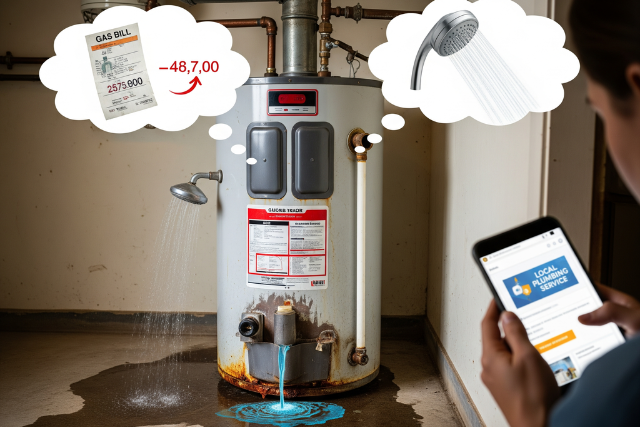
Water pooling under your water heater is the most urgent sign and requires immediate attention. Even small drips mean the tank structure itself is failing, and corrosion has breached the interior. Corrosion creates holes and cracks that allow water to leak throughout the day continuously. There is no repair for a leaking tank because you cannot seal the inside from the outside successfully.
For this reason, you need a water heater installation if you see leaks, as temporary fixes only delay the inevitable. Water damage spreads quickly to the flooring, walls, and foundation areas surrounding your unit, so acting quickly is critical. This is a clear hot-water warning sign that demands urgent professional action from experienced plumbers.
What leaks tell you about the situation:
- Even small drips indicate that internal corrosion has permanently compromised the tank’s integrity.
- Moisture rings or rust stains around the base indicate recent, prolonged leakage.
- Water pooling under the tank indicates structural failure in your home.
- Getting a professional replacement prevents thousands of dollars in repair costs for property damage later on.
7. The Plumber Visits Your House Multiple Times Every Year
When you find yourself calling for repairs more than once or twice a year, it strongly favors replacement. Repairing an aging unit can often be far more expensive than installing a new one immediately. Each repair is temporary, and something else breaks the following week or month without fail. This endless cycle of repairs wastes money on a system that is genuinely dying and beyond saving.
When your water heater requires frequent repairs, it’s time to consider a replacement rather than repairs. Most professionals recommend replacement when repair costs exceed 50% of a new unit’s price. The life of water heaters gas or electric, typically extends far beyond units that require frequent service calls.
What frequent repairs actually indicate:
- Two or more repair service calls in a single year indicate the system is failing progressively and requires more than simple patching.
- Expensive repairs on units over ten years old provide inferior value for your money and ongoing investment.
- Quick fixes that fail again soon represent wasted money and repeated inconvenience to your family’s daily routine.
- Replacing the unit is a more financially sound option than continuing to repair it indefinitely.
8. Hot Water Pressure from Your Faucets Feels Much Weaker
When hot water barely trickles from your shower or kitchen sink, sediment inside the tank is likely the culprit. Mineral buildup narrows the passages through which water continuously leaves your tank. Cold water might flow normally, while hot water seems barely visible or weak. This pressure difference tells you exactly where the problem originates.
Hard water in Riverview, FL, and the Hillsborough County area makes this particular issue more common than people realize or expect. If sediment cleaning does not fully restore your pressure, a water heater installation is the best solution. Recognizing this as a hot water warning sign helps you understand what instant water heater repair cannot permanently fix.
What pressure changes reveal:
- A drop in hot-water pressure while cold-water pressure remains strong indicates the tank as the source.
- Pressure has been slowly worsening over several months, indicating progressive sediment accumulation within the system.
- Multiple fixtures throughout your home are showing low hot water pressure, indicating a problem with your tank.
- Installing a new unit restores full water pressure and normal flow immediately without hesitation or delay.
9. Your Hot Water Looks Cloudy or Murky When Running
Cloudy or murky water from your hot water taps indicates that minerals and sediment are floating in the tank. Sometimes, temporary cloudiness clears within seconds, but if it persists, something is definitely wrong. This haziness differs from air bubbles that clear quickly after initial running. Your water quality definitely suffers when these particles continuously flow through your home’s plumbing system. When your water is consistently cloudy from every hot tap, it is a clear sign you need a new water heater installed soon.
New systems deliver the clear, clean water your family deserves and expects from their home. Understanding how often to change a water heater includes recognizing this visible quality indicator.
What cloudiness patterns show:
- Water clearing within a few seconds suggests temporary sediment stirring, not necessarily real tank problems.
- Cloudiness that persists in every hot tap indicates advanced mineral accumulation in the tank, steadily progressing.
- Visible particles in a glass of collected hot water confirm contamination from the internal breakdown of tank components.
- A new water heater installation immediately and noticeably improves water clarity and overall quality.
10. Visible Rust or Corrosion Appears on the Outside of Your Tank
Rust streaks running down your water heater or corrosion on connected pipes indicate that internal problems have already progressed significantly. When rust appears on the exterior, substantial rust is present throughout the tank structure as well. Corroded pipes connected to your tank indicate that chemical reactions are occurring throughout the system. This corrosion spreads and worsens until it completely compromises the tank’s structural strength.
Seeing rust on your water heater equipment is a clear sign that you need a water heater installation before catastrophic failure. Do not ignore these visible warnings; they indicate that your unit is genuinely in its final stages of operation. This is one of the most critical indicators of a hot-water issue, requiring immediate professional assessment.
What external corrosion actually means:
- Rust streaks running down vertically typically come from small interior leaks starting to develop underneath
- Brown staining around the base and sides confirms active oxidation and corrosion moving forward relentlessly
- Corroded connection points to pipes indicate the problem extends beyond just inside the tank itself
- Professional inspection confirms whether tank replacement is needed right away or if time remains for planning
How Cape Sewer & Drain Handles Your Water Heater Installation?
Spotting these ten warning signs is genuinely the first step. What really matters is taking action with somebody you can trust in your community. Cape Sewer & Drain has served Riverview and the Hillsborough County area for over 15 years, helping countless homeowners with water heater replacements. Our team understands why water heater installation decisions feel urgent and handles everything from a system check to installation.
Cape Sewer & Drain provides the services your home actually needs:
- Emergency 24/7 same-day service available when your system fails without warning.
- Professional inspections that tell you the truth about whether your tank can be repaired or truly needs replacement.
- Expert water heater installation services with modern, efficient equipment for your home.
- Fair assessments about repair versus replacement, so you save money on unnecessary work.
Contact Cape Sewer & Drain today to schedule your water heater installation evaluation and get peace of mind knowing experienced people are handling your home.
Final Thoughts
Your water heater operates quietly every day, providing a service your family depends on entirely. When you spot these 10 warning signs, a water heater installation becomes something to plan for rather than something that catches you off guard. Choosing to plan means selecting a plumbing service company you trust, exploring energy-saving options, and avoiding the panic of frozen pipes and cold showers. Your family will appreciate having reliable hot water for years, and you will avoid the frustration and unexpected expense of a sudden failure.
Don’t wait for your water heater to fail at the worst possible time. Call Cape Sewer & Drain at +1 813-392-1763 today and let our experienced team evaluate your system. Your comfort matters, and we’re here to help.
Frequently Asked Questions
What is the typical lifespan of a gas water heater in Florida?
Most gas water heaters last between 8 and 12 years in Florida’s climate. Hard water and humidity can shorten this lifespan compared to cooler regions.
Should I repair or replace my water heater?
If repairs exceed 50% of the replacement cost, or your unit is over 10 years old, replacement makes more financial sense than ongoing repairs.
How much will a new water heater installation cost me?
Costs vary based on tank size and type, but professional installation typically ranges from $800 to $2,000, depending on your specific needs.
Can I install a water heater myself, or do I need a professional?
Water heater installation requires specialized knowledge, permits, and gas or electrical work. Always hire licensed professionals, such as Cape Sewer & Drain, for safety.
When should I replacethe water heater before it becomes an emergency?
Replace your water heater around year ten, or immediately if you notice leaks, rust, insufficient hot water, or strange noises indicating serious problems.
How long should a hot water tank last in typical conditions?
Most hot water tanks last between 10 and 15 years with proper maintenance. Florida’s climate and hard water may reduce lifespan to eight to twelve years.